

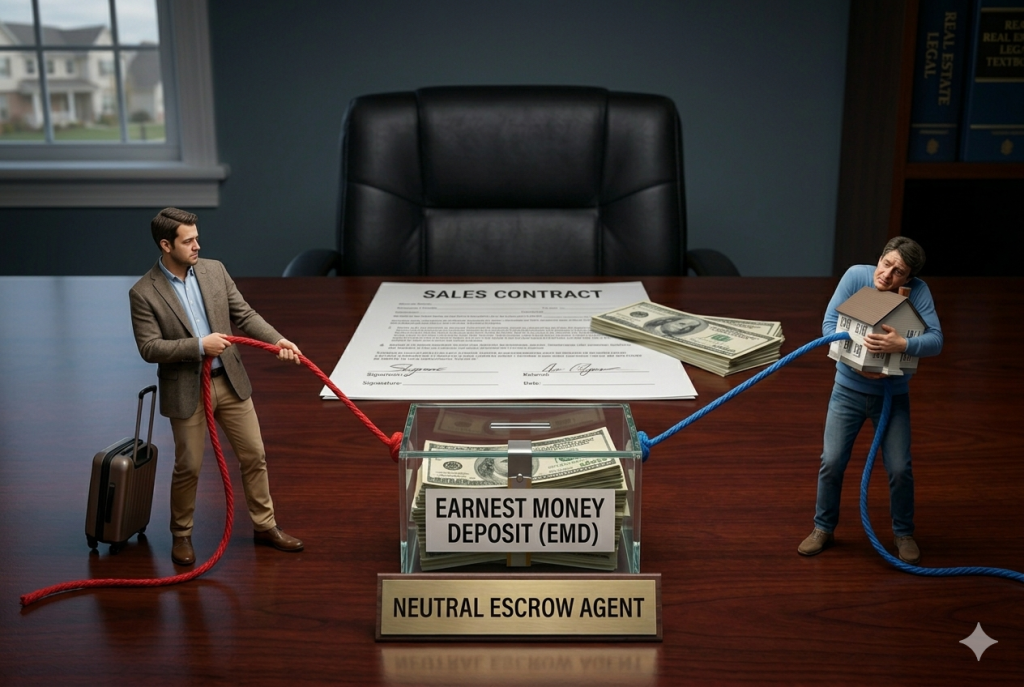
Selling or buying a home is a significant financial and emotional undertaking. You’ve invested time, negotiated a price, signed the contract, and started planning your next chapter. The transaction appears to be cruising toward a successful closing. However, one of the most frustrating deal breakers can suddenly bring everything to a halt: the buyer or the seller gets cold feet.
When someone decides to walk away from a signed real estate contract, it introduces a maze of escrow disputes, legal clauses, and emotional stress. It is often one of the most irksome hurdles to clear in real estate. Fortunately, understanding the mechanics behind canceled contracts, escrow funds, and legal obligations can help you navigate this difficult situation.
Your Top Questions on How to Handle Cold Feet, Answered
The Escrow Standoff: Where Does the Deposit Go?
When a buyer gets cold feet and decides to walk away without a valid contingency, there is a common misconception among sellers that they automatically get to keep the buyer’s earnest money deposit. Unfortunately, it is rarely that simple.
The money held in escrow as a deposit is usually managed by a neutral third party, such as a title company or a real estate attorney. These entities will not simply release the funds to the seller just because the buyer defaulted. In order for the escrow money to be released, there must be a formal “release of contract” or “release of escrow” document signed by both the buyer and the seller.
Most buyers who back out do not want to willingly sign away their deposit. This often leads to a standoff where both parties are fighting for the funds. Even in situations where it is abundantly clear that the buyer defaulted and does not deserve the money back, getting those funds released requires a “meeting of the minds” and often turns into a secondary negotiation. If you find yourself in this situation, prepare yourself for the reality that the escrow money will not automatically land in your bank account.
Common Reasons Buyers and Sellers Get Cold Feet
While some contract cancellations are malicious, most stem from genuine anxiety. Understanding why the other party is backing out can help you negotiate a solution.
- Buyer’s Remorse: So, you’ve decided to buy a house? You’re not alone, but you might also be experiencing a bit of Buyer’s Remorse, and if you’re like many people, it’s especially related to your mortgage. The fact of the matter is that a mortgage is a huge commitment of debt. It’s quite possible that you haven’t lived with a mortgage prior to becoming a homeowner. Because of this, the full weight of this commitment might be a bit too much to fully grasp when you sign on the dotted line.
- Inspection Panic: While structural issues in a home are a perfectly valid reason for a buyer to consider walking away from a deal, a little perspective is needed when it comes to the myriad of minor, easily fixed items that show up on a home inspection report and become a reason for a buyer to ask for concessions or to back out of the deal.
- Rate Shock: What happens when interest rates rise dramatically from the rate that was locked in when the mortgage was approved, and the new rate impacts the buyer’s affordability? The home that was affordable under the prior rate, is no longer affordable under the new higher rate.
- Seller’s Emotional Attachment: Some of our clients have lived in their homes for 20 years or more. Therefore, they can become very emotionally attached to the house. As moving day approaches, these sellers can begin to feel sad and guilty about leaving.
Buyers and sellers in a rapidly shifting market may not always see things the same way and that’s often when things get really tough. We’ve heard stories of sellers backing out of a purchase because they couldn’t find a new place to live. The circumstances can be really tough.
Understanding the "Specific Performance" Clause
Most standard residential real estate contracts contain a legal provision known as a Specific Performance clause. This clause legally binds both the buyer and the seller to the terms of the agreement.
If a seller gets cold feet and refuses to sell, the buyer has the legal right to sue for specific performance, forcing the seller to hand over the property. Over the years at List With Freedom, we have seen sellers successfully forced to sell after backing out of contracts, but it is an incredibly costly and time-consuming legal battle. There are no guarantees in court, though a victorious buyer may be able to recoup a large portion of their attorney’s fees from the sale process.
Conversely, while a seller could theoretically sue a buyer for specific performance, it is rarely practical. After all, how do you make someone come out of pocket with money they simply don’t have? If a buyer is backing out due to a lack of funds or a financing failure, a lawsuit cannot force money into existence.
How to Protect Yourself from "Cold Feet" Deal Breakers
While you cannot control someone else’s emotions, you can take proactive steps to protect your transaction from falling apart.
- Require a Solid Earnest Money Deposit: The sellers should ask for an earnest money deposit that is substantial in relation to the purchase price. A deposit of 1% to 3% of the purchase price is standard. A small earnest money deposit gives the buyer some room to negotiate without jeopardizing their position. The buyer may choose to back out of the contract for relatively small issues if the earnest money deposit is low.
- Vet the Pre-Approval: It is important to make sure that the buyer has a pre-approval for the purchase and not a pre-qualification. A mortgage pre-approval is different than a mortgage pre-qualification and the extra step can save a lot of hassle at the last minute.
- Keep Communication Open: Communication is key. Both parties need to be communicating constantly. A lot of buyer and seller concerns can be worked out if they talk to each ther before the contract is terminated.
The Human Element: When Tragedy Strikes
Cold feet is one of the many reasons a buyer and/or seller might cancel a real estate deal due to a variety of reasons, including increased anxiety or a change in financial situation. Bad circumstances can sometimes be the reason for cancellation in a real estate contract. These have occurred a few times on List With Freedom, with various unpleasant incidents being bad enough to give second thoughts to a buyer or fatal to a seller before the closing escrow takes place.
A contract can fall apart for a multitude of reasons, some within your control and some not. Real estate is a business but it is also a people business and people have personal issues. If a contract falls apart due to issues beyond the control of the other party or vendor just accept it and negotiate the terms of cancellation. Rather than wasting time worrying about the property that did not sell, focus on marketing and selling the next property or your search for your next home.
Moving Forward with Confidence
Having a real estate deal fall through because someone backed out is incredibly frustrating, but it does not mean your real estate journey is over. By understanding how escrow works, familiarizing yourself with legal clauses like specific performance, and taking proactive measures, you can protect your assets and your peace of mind.
At List with Freedom, we help navigate you through every step of the home selling process. Having an experienced team on your side can make all the difference when dealing with contract negotiations and unexpected deal breakers. At List with Freedom, we provide expert guidance and a flat-fee MLS listing service that helps you sell your home with confidence while saving money.
If you’re ready to take the next step, learn how List With Freedom works and begin the process of listing your home.